Post-decannulation
Following the removal of the tracheostomy tube, the patient is left with an opening into the trachea. An airtight dressing is required to prevent the ongoing passage of air through the tract (tracheo-cutaneous fistula) which will delay wound healing.
The patient should be encouraged to apply gentle pressure to the dressing whilst coughing or speaking.
The wound should be airtight within two weeks and if not, then a referral to an appropriate surgical team should be made.
The use of a standardised weaning procedure should reduce the risk of patients 'failing' a decannulation attempt. However, a patient’s condition can alter which may necessitate re-insertion.
Question: What factors influence the method of re-insertion in this circumstance?
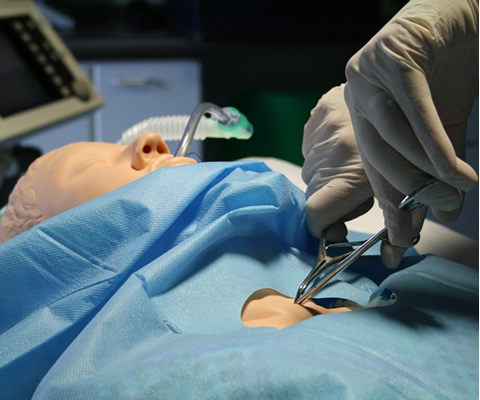
Answer: Factors influencing the method of re-insertion include:
| Type and duration of original tracheostomy |
|
| Time since decannulation |
|
| Clinical urgency |
|
| Skills and equipment available |
|