Essential Equipment
Most laryngectomy problems can be prevented by good basic nursing and medical care, provided that essential emergency equipment is with the patient at all times. Most patients will have a routine for at home, but we need to adapt this if a patient is admitted to hospital; in the ward, ICU or nursing home, and whenever the patient moves between locations, e.g. to x-ray departments. A small emergency 'lunchbox' is ideal for the emergency equipment.
Some of this equipment may be available routinely at the bed space or on the cardiac arrest trolley:

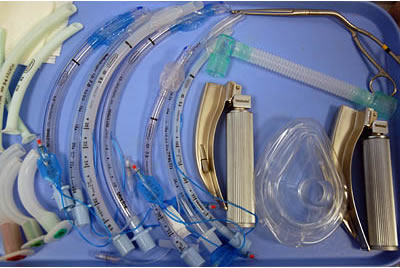
Basic airway equipment
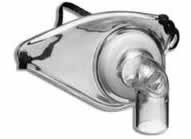 Oxygen masks for the face and the tracheostomy require
two oxygen supplies. Critical care and some specialist areas usually have
two supplies, but if not, think what you need and plan where to get it
from, before an emergency occurs.
Oxygen masks for the face and the tracheostomy require
two oxygen supplies. Critical care and some specialist areas usually have
two supplies, but if not, think what you need and plan where to get it
from, before an emergency occurs.
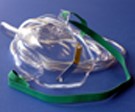
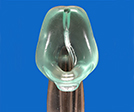 Laryngeal mask
airways and paediatric facemasks can be used to
oxygenate and ventilate via the stoma and should be available for all
tracheostomy patients.
Laryngeal mask
airways and paediatric facemasks can be used to
oxygenate and ventilate via the stoma and should be available for all
tracheostomy patients.
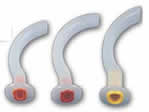 Oral and nasal airways should be available, along with
other basic airway kit.
Oral and nasal airways should be available, along with
other basic airway kit.
Advanced airway equipment
Standard Supraglottic Airway Devices (such as laryngeal mask airways), laryngoscopes and a range of endotracheal tubes should be available on the arrest trolley.
A small size 6.0 endotracheal tube should be available as this can be inserted into the stoma if necessary.
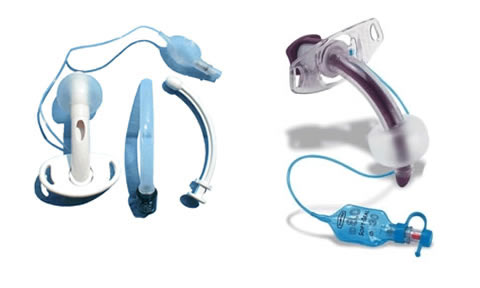
Spare tracheostomy tubes
As a minimum, two spare tubes should be at the bedside; one tube of the same size and one tube a size below that currently used by the patient.
Spare inner cannuale are useful because they can be lost or become damaged.
Some tubes have an inner cannula, which needs to be in place to connect the patient to a breathing circuit, and in this case a spare cannula is essential.
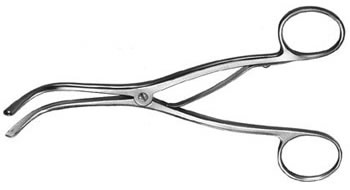
Tracheal dilators and Tilley's forceps
Tracheal dilators may have a role in keeping a stoma open or allowing someone who is experienced in their use to manipulate a tube into a laryngectomy stoma.
Tilley's forceps can help to remove secretions from inside the stoma.
Suction
A range of suction catheters must be available.
|
Inner diameter of tracheostomy tube (NB: see manufacturers' details to confirm) |
Suction catheter |
|
|
FG |
mm | |
|
10 mm |
14 | 4.5 |
|
9 mm |
12 | 4 |
|
8 mm |
12 | 4 |
|
7 mm |
12 | 4 |
|
6 mm |
10 | 3.3 |
|
5 mm |
8 | 2.6 |
Endoscope
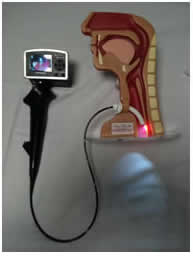 An endoscope should be available in any area caring for patients
with tracheostomies. Immediate availability is required for critical care
and other specialist areas, where endoscopes can be used to inspect tubes
suspected of being displaced, or to guide the insertion of bougies or
tubes into stomas. Disposable, single-use endoscopes are now available to
complement traditional re-useable endoscopes.
An endoscope should be available in any area caring for patients
with tracheostomies. Immediate availability is required for critical care
and other specialist areas, where endoscopes can be used to inspect tubes
suspected of being displaced, or to guide the insertion of bougies or
tubes into stomas. Disposable, single-use endoscopes are now available to
complement traditional re-useable endoscopes.
Personal protective equipment
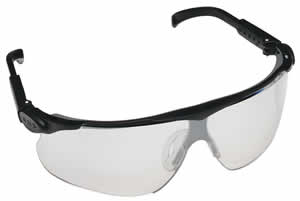
Care must be taken to protect staff. Gloves must be worn and, ideally, eye protection should be worn, sometimes with an apron, depending on the patient’s infection status and location.
Miscellaneous equipment:
- Scissors
- Tracheostomy dressings, ties and tapes
- Water soluble lubricating jelly
- Sterile dressing pack
Scissors (and stitch cutters if the tracheostomy is sutured in place) are required to remove dressings and ties rapidly in an emergency.