Narrow-Bore Percutaneous Cannulae
Narrow-bore cricothyroidotomy devices are usually cannulae with an internal diameter of 2-3 mm or less. A large-bore IV cannula may be used, e.g. 14-16 G, but can be very prone to kinking.
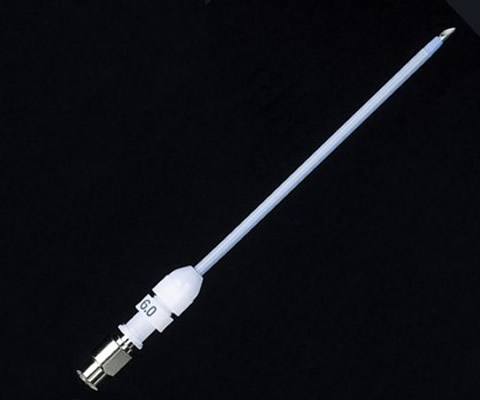
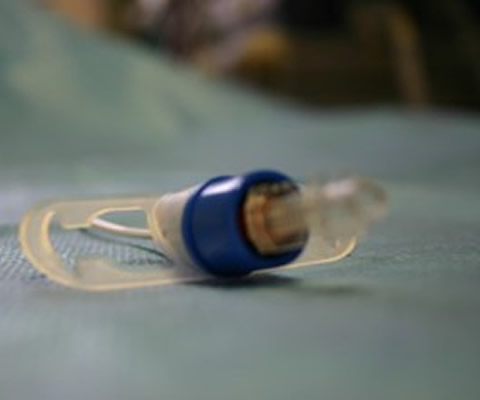
Purpose-built devices such as the Cook DTJV-BTT (Fig 1) or VBM Ravussin (Fig 2) cannula should be used in preference to simple IV cannula for narrow-bore cricothyroidotomy. Both these devices use a cannula over trochar technique.
To insert a narrow-bore cricothyroidotomy device:
- If possible, extend the neck
- Attach a syringe to the needle to allow aspiration of air. This enables confirmation of successful placement in the airway
- Immobilize the larynx and locate the cricothyroid membrane
- Insert the cannula through the membrane in a caudal direction at 45 degrees
- When air is aspirated slide the cannula off the trochar
- Attach the syringe to the cannula and check again for aspiration of air
- Use a high pressure delivery device, e.g. Manujet, to deliver oxygen via these narrow cannulae
- Ensure there is a route for gas to escape through the upper airway
Fig 3 shows a narrow-bore cricothyroidotomy technique using a Ravussin cannula.
Select the Play button to watch the video.
The Difficult Airway Society do not recommend these devices for emergency FONA. Their use in the CICO situation should be limited to experienced clinicians who use them in routine clinical practice.