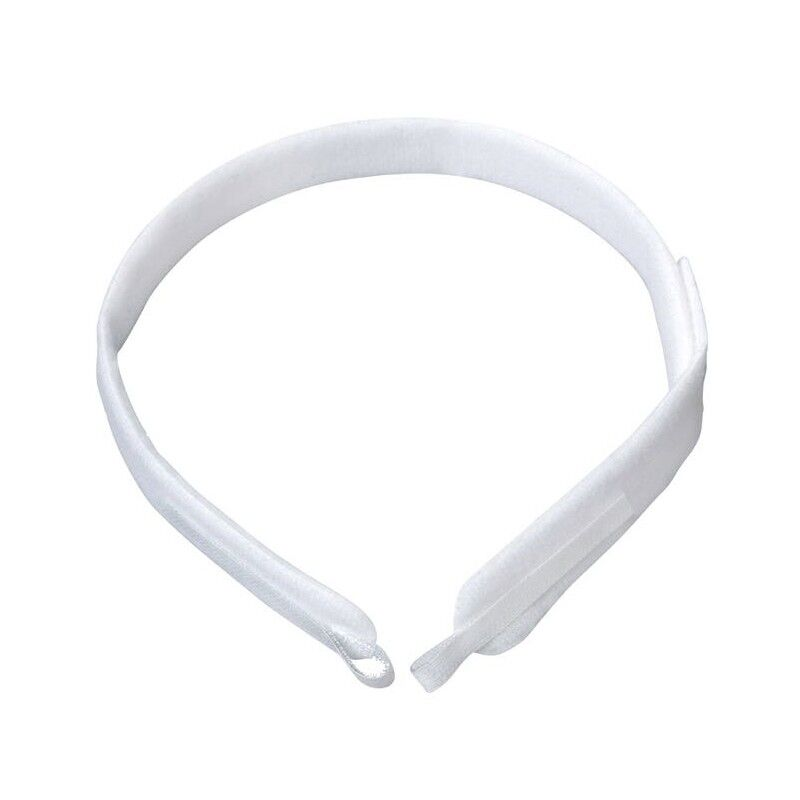
There is no firm evidence to suggest that one fixation method is more suitable than another. There are certain situations where one type of tube tie can be a problem; for example Velcro ties can stick to the bedsheets of babies and small children with tracheostomies and have been implicated in displacement. The best fixation device is arguably an attentive staff member.
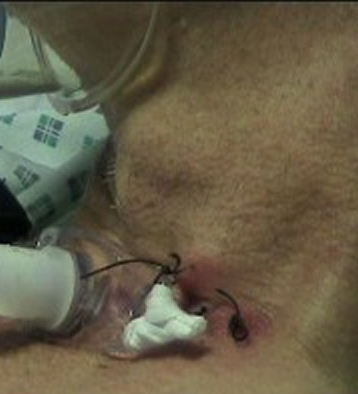
Tracheostomies may be sutured in place after they are first inserted to reduce the risk of early displacement. Again, there is no clear evidence that sutures reduce displacement. These sutures can usually be removed after seven days when the stoma becomes established (Fig 1). Suture scissors need to be available immediately should these tubes require urgent removal.
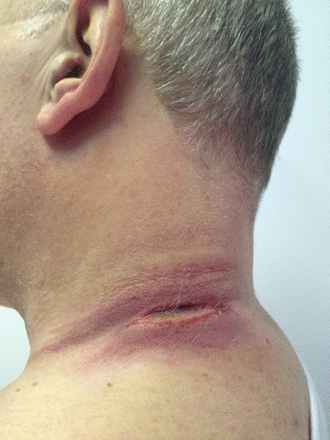
Whatever fixation device you use, check regularly that it isn’t causing pressure problems from the tracheostomy tube itself or from the ties. This is a particular problem with critically ill patients who are sedated and cannot position themselves, on vasopressors, those with pre-existing skin problems or the obese. Ensure that you can get one finger between the tie and the neck skin, ensuring it isn’t too tight.
Fig 2 shows an example of tube ties causing a wound that complicates and delays recovery.
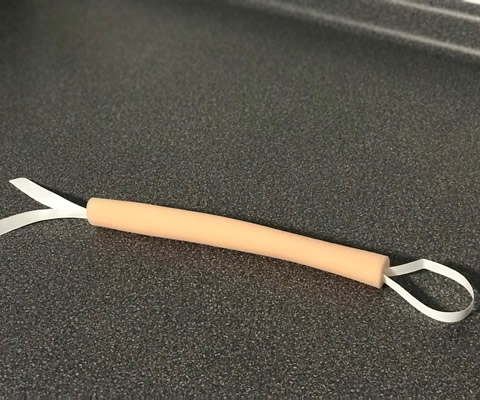
Changing the ties need 2 pairs of hands - one to hold the tube and one to do the ties. Foam or soft rolls are sometimes used around the back of the neck. Fig 3 is a video showing changing tube ties (in a baby, but the principles are the same).
These images show: