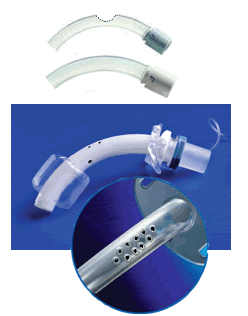
Fenestrated Tubes
Fenestrated tubes have an opening(s) on the outer cannula, which allows air to pass through the patient's oral/nasal pharynx as well as via the tracheostomy tube. The air movement allows the patient to speak and produces a more effective cough.
By using different inner cannulae (Fig 1) the outer hole can be blocked or kept patent.
Fenestrations increase the risk of oral or gastric contents entering the lungs. Patients who are at high risk of aspiration, or those receiving positive pressure ventilation should not have a fenestrated tube, unless a non-fenestrated inner cannula is used to block off the fenestrations.
Suctioning with a fenestrated tube should only be performed with the non-fenestrated inner cannula in situ, to ensure correct guidance of the suction catheter into the trachea.