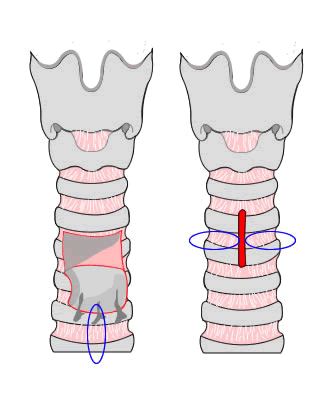
Different Types of Surgical Incision
There are a variety of different surgical techniques employed to create tracheostomies. The tissues around the trachea are dissected and then the trachea is entered by making an incision in its anterior wall. Four main different types of surgical incision are used:
A percutaneous tracheostomy uses a dilatational technique to create a stoma between the tracheal rings, although tracheal ring fracture commonly occurs.
There are a variety of different surgical techniques employed to create tracheostomies. The tissues around the trachea are dissected and then the trachea is entered by making an incision in its anterior wall. Four main different types of surgical incision are used:
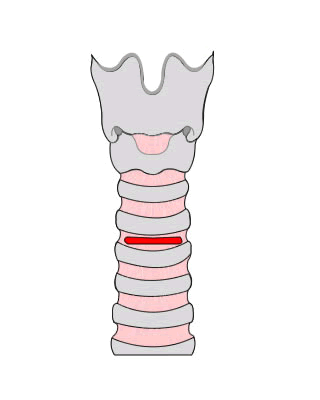
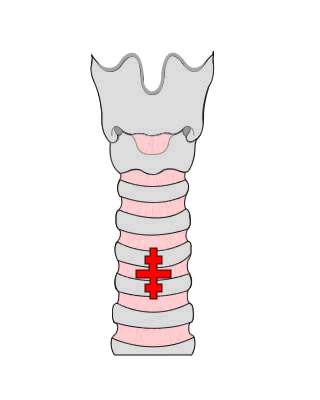
- Horizontal slit - a horizontal or T-shaped
tracheal opening through the membrane between the second and third or
third and fourth tracheal rings (Fig 1). With this incision, a silk
stay suture can be placed through the tracheal wall on each side and
taped to the neck skin on either side. This facilitates tube
replacement by pulling the trachea anteriorly and widening the opening
should the tube dislodge in the immediate postoperative period. These
sutures are removed after the first tracheostomy tube change 5-7 days
postoperatively once the newly formed tract from the skin to the
trachea becomes more established.
- Window
- Vertical slit
- Björk flap
A percutaneous tracheostomy uses a dilatational technique to create a stoma between the tracheal rings, although tracheal ring fracture commonly occurs.
There are a variety of different surgical techniques employed to create tracheostomies. The tissues around the trachea are dissected and then the trachea is entered by making an incision in its anterior wall. Four main different types of surgical incision are used:
- Horizontal slit
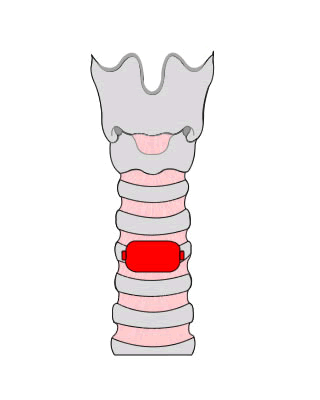
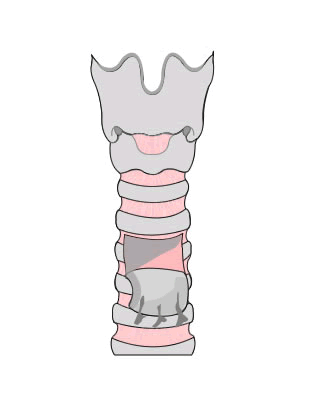
- Window. Removal of small anterior portions of the
tracheal rings can create a more permanent stoma, like the ‘window’
shown in Fig 2.
- Vertical slit
- Björk flap
A percutaneous tracheostomy uses a dilatational technique to create a stoma between the tracheal rings, although tracheal ring fracture commonly occurs.
There are a variety of different surgical techniques employed to create tracheostomies. The tissues around the trachea are dissected and then the trachea is entered by making an incision in its anterior wall. Four main different types of surgical incision are used:
- Horizontal slit
- Window
- Vertical slit - A U- or H-shaped tracheal opening
can be made and the tracheal flaps can be tacked to skin edges with
absorbable sutures to create a semi-permanent stoma (Fig 3). Sutures
can be placed in each tracheal flap and taped to the chest and neck
skin, facilitating replacement of a displaced tube in postoperative
care. Pulling on these sutures widens the tracheal opening. Most modern
adult surgical tracheostomies will be performed in this way
- Björk flap
A percutaneous tracheostomy uses a dilatational technique to create a stoma between the tracheal rings, although tracheal ring fracture commonly occurs.
There are a variety of different surgical techniques employed to create tracheostomies. The tissues around the trachea are dissected and then the trachea is entered by making an incision in its anterior wall. Four main different types of surgical incision are used:
- Horizontal slit
- Window
- Vertical slit
- Björk flap A different type of surgical
tracheostomy is the Björk flap where a ‘ramp’ of trachea is sutured to
the skin which allows easier replacement of tracheostomy tubes
(Fig 4). There may be a suture to the skin here too, but this
is to hold the ‘ramp’ in place, rather than to be used to elevate the
trachea for a tracheostomy tube change. If Björk flap sutures are
pulled, they may tear the ‘ramp’ and occlude the stoma.
Björk flap tracheostomies are not commonly performed, but if they are done in your hospital, you need to know what the bits of suture coming out of the stoma will do when pulled!
A percutaneous tracheostomy uses a dilatational technique to create a stoma between the tracheal rings, although tracheal ring fracture commonly occurs.
There are a variety of different surgical techniques employed to create tracheostomies. The tissues around the trachea are dissected and then the trachea is entered by making an incision in its anterior wall. Four main different types of surgical incision are used (Fig 1):
A percutaneous tracheostomy uses a dilatational technique to create a stoma between the tracheal rings, although tracheal ring fracture commonly occurs.
Sutures
Fig 5 shows a Björk flap with a ‘flap suture’ to the skin (blue) and slit-type tracheostomy with 2 stay sutures (purple) to the skin. These can be used to manipulate the trachea.